Monday, March 23, 2020

Deeds, Not Words, Lead a Nation

Interesting stat I saw yesterday but wanted to confirm before posting. South Korea's new Coronavirus cases have been flat to declining. Their new cases per day have been around 100 now for about 11 days. That's down from a peak of around 900 per day. They test 20,000 people a day. Their first reported case was January 20th. it's a good sign that diligence can make a difference.


The US case numbers are still increasing. and we still haven't been able to scale up testing because we don't have the volume of tests needed or ability to protect the people doing them, we just don't have the medical supplies. The states are in a bidding war with each other to get needed supplies.

So, what's my point? The first case of Coronavirus in the US was January 20th. Both countries had the intelligence about what was going on, yet one country's leader kept dismissing it as a hoax, as just another flu, it will go away by itself, etc. The travel ban from the administrator was announced on January 31st and went into effect on February 2nd. Yet, for another 4 weeks, despite what other leaders were doing, despite the CDC warnings, despite intelligence reports, our president didn't take it seriously.

Two countries, same intelligence info, same date of first infection, both modern industrialized nations. The one with real leadership is today, post the peak of its case crisis. The US, with a clueless leader, is at the beginning of what will be the most devastating crisis for Americans in our lifetimes, and, with no end yet on the horizon. Some say the weight of the world is on the president's shoulders, poor man.

Consider this, if you lose a family member or friend to this disease, if you lose your business, your house, whatever, remember that even after the travel ban he keeps mentioning, even with government officials telling him we needed to do one thing or another to address this, this president didn't listen. He did nothing to address this virus until the stock market crash woke him up. 6 weeks of potential action that could have been taken - wasted, lost by a man truly incapable of leading.


Fox News and right-wing media will continue to be kind to this president, they will together blame every thing, everyone else. The president will use his typical diversion messaging tactics - he was posting about Hillary's emails just a few days ago.

History, however, will not be as kind to this president. Unfortunately, too many of us will be mourning friends and loved ones, and be struggling for the foreseeable future due to his lack of leadership. It's not fake news, this is real. In a country like ours, we should have been ahead of this.

Deeds, not words, lead a nation.

Monday, September 26, 2016

Business as Usual, Not Anymore. What do disruptors do right?


As an entrepreneur, I’ve been responsible for the disruption of business as usual very successfully a few times. As an angel investor, I have invested in a few companies that have played that same role in their particular vertical or technology as well. 
One of my early companies entered the retail pharmacy system space at a time when the existing vendors felt there was little room for new computer systems in pharmacy. They were wrong. OPUS Forte came in with a solution, rather than a computer system and it turns out that solving problems resonates a lot better than selling systems. We grew very fast, and forever disrupted the way things were done behind a pharmacy counter.
Another of my earlier companies was the pioneer in the adjudicated copay card space. OPUS Health was the first company to deliver solutions around an adjudicated copay card, a tool that enabled pharma companies to forever change the PBM’s tiered copay stranglehold on Physician and Patient choice.  
10 years after being sold, both of these companies and their products are still out there. They still have some of the great teams we put in place to disrupt and innovate. Yet, they stopped - innovating, stopped creating solutions, and never quite disrupted anything thereafter.
So, what changed? And, more importantly, what excites me about disrupting Retail Pharmacy once again. Let me share a few tips.
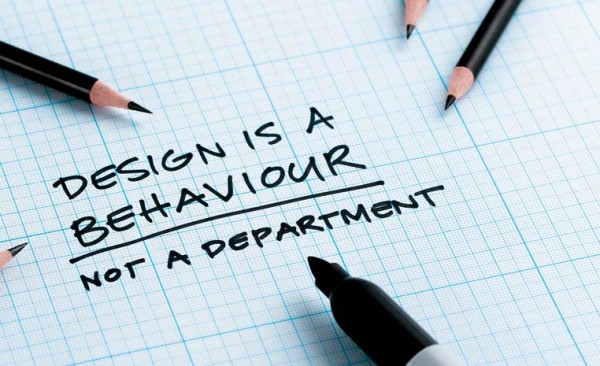
Design. As the world gets more complex, good design is rewarded. It can be pretty, elegant, functional or simple. Good design applies to products, services, software, and retail. It also applies to the way you view and interact with your customers. Up until around 2011,Apple was king of this. Since losing Steve Jobs, much has been lost in this respect.
That said, one of my go-to read’s is You Can’t Innovate Like Apple, but you should try.  The link above is a great article I read many years ago in an issue of Pragmatic Marketing.  I kept the issue and revisit it time and again to remind myself of what it takes to make great products.  Tim Cook should read this, because on software, at some point they deviated from this process at Apple.
Service. You must be a service leader. You can define “service” any way you want. Just deliver it consistently. Southwest Airlines is a service leader, even though it makes the customer do everything. Go figure. Better yet, go copy. BMW service centers look like a high-end shopping mall. Coffee, Tea while you wait or if more time required, you get a rental while your car is being serviced. The whole experience is the product.
Workflow. Some call it logistics. There’s an old military saying: “Armchair generals talk strategy. Real generals talk logistics.” Pick a leader in any field and you’ll find superb logistics and supply chains underneath. Sam Walton built Wal-Mart on superior logistics, using cutting-edge technology of the day: bar code scanners and mainframe computers. Amazon excels at logistics today.
The User Journey. This is not only about the way customers interact with your products and solutions, but how you view and interact with customers. It starts with understanding and providing solutions around their journey. Apple was great at this when they defined it, and they are still king when it comes to hardware. Software, not so much. Their solutions are getting fatter, clunky, and further away from the simple, non-distracting mobile experience it should be. Apple rarely listens and has forgotten the user journey. Product passion has played a role in dismissing this as an issue for many customers, but too much time is wasted working with their devices because of this. It’s mobile, it should lack distraction by design.
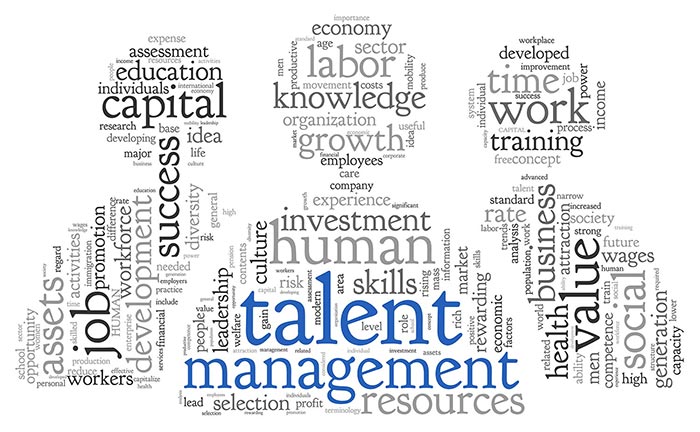
Talent. You need to hire for, build, and nurture great teams. What matters to every company is talent evolution versus talent deterioration. Multiply 1.01 times a large number and watch it grow. Conversely, multiply 0.99 times a large number and watch it shrink. Now think of your employee base: Always be getting better, start by empowering within.
Internal communication. Way too many companies fail here. As a result, they leak energy, miss opportunities and demoralize employees. The U.S. armed forces, especially the Navy–submarines and aircraft carriers in particular–are top-notch. Study them.
External communication.  Current customers, prospects, customers you've lost, partners, ex-employees. Make those who have opted-in or are still paying attention feel like part of the family. Do you want your ex-employees saying good or bad things about you? It may happen with ex-customers or it may not. Sometimes the fit just isn't right, doesn't mean how you handle things won't keep them saying the right things about you.
Brand. Helmut Panke, the former chairman and CEO of BMW, summed up brand perfectly: “I want to be able to blindfold a person, set him down in a BMW and have him know it’s a BMW by the feel of it.” The best brands are not shallow. They touch a customer’s every sense.
Purpose. There has never been a better time to be a company of integrity. You’ll never achieve integrity unless everyone knows what you stand for–your purpose. This must be built on a moral foundation. God and the tweeters will strike down those who fake it.
In consideration of both “Brand” and “Purpose”; I have a rule and I am not sure where it came from, but I live by it.  I reinforce this message with entrepreneurs, employees, peers and my children whenever it’s seems an appropriate teaching moment.  If you don’t put enough of yourself into a project that you can proudly sign your name on it, then don’t bother doing it.  Quite frankly it’s the reason I refuse to paint or wallpaper, I suck at both.

Our work is our legacy, be it analog, digital, in the kitchen, with power tools, pen and paper, paint, the actual canvas does not matter.  When you are through, can you sign your name for all to see, shouting out that this work, my work is an extension of your personal brand?

3)    Buck the trend, Invest when things are down.  A while back I listened to a podcast out of Stanford, “Forty Years Of Computer Science, A Retrospective”. As part of the podcast, there was some visionary reminiscing of the computer revolution’s early days.  One thing in particular stuck with me; during a downturn, when everyone else is cutting back chasing profits, you should be investing for the coming upturn.  People are hopeful but tolerant for performance when things are bad, but by investing during the downturn, you can come out faster and stronger, exceeding expectations while others struggle to recover or return to normal.  The markets will reward you for this insight.

Great brands result from great ideas turned into great products with full support of the company behind them.  Disrupt Away, and oh, yea – Welcome to Point of Care Systems.

Harvey Brofman

Referenced links:
Some concepts originated from Karlgaard's 2011 innovations rules and my own post from around the same time.



Wednesday, May 18, 2016

Becoming a Better Listener - Hearing, Not Just Listening.

Becoming a Better Listener

So I saw this title (article here by Suzie McCarthy) and got very excited. Not because of it's social listening bend, no, it's because it ties back to a very basic, yet critical lesson one of my ADHD friends (eventually to be a business partner) was given somewhere between high school and our professional lives.  This friend had quite a bit of trouble paying attention for very long, quite honestly because his mind was running at 5 times the speed of everyone elses and god only knows what he was thinking while 'listening'. 

But the truth is that everything in business (and quite a bit personally) requires not just listening, but actively listening. 
Human ear icon

To Suzie's point "I’m a problem-solver. That’s one of the reasons I became a social strategist. I’m always on the look out for better solutions and ways to transform theory into practice. The downside to this is that I tend to not be the best listener. If you’re telling me anything that involves a problem, my mind immediately focuses on that and begins to work on pulling together a variety of potential solutions."

This is more reactive listening than listening. Suddenly you are no longer processing what is being said (ie: hearing it) and your mind is someplace else. It's very hard to multitask when trying to actually listen. In fact studies are showing more and more that we just aren't very good at multitasking anyway.

Many listen, fewer actually hear, and therein lies the key at a level below what Suzie is even talking about in this great piece she wrote. Don't be the one that has to be scolded because "you listen, but you do not hear"; if you jump off and try to figure it out or solve the permutations of the problem without really listening to what's being said - you are at a disadvantage from the start, trying to craft any strategy for a solution with incomplete data, perhaps not even solving the wrong problem.

she continues "Social strategists must be strategic listeners as well as effective problem solvers. This can be difficult in our fast-paced world. The pressure comes externally as well as internally to make snap strategic decisions based on already known facts."

Expected or not, our best work does not come via decisions based only on already known facts, you also need those facts specific to the problem at hand, blending existing knowledge and understanding with current data to craft a decision, solution, etc.  So the truth is that even without social media listening considerations, we are dealing with an ever-changing landscape made up of layers upon layers of human behavior. The speed at which social information flies only complicates matters further because as Suzie noted, "A successful social strategy must take into account the needs and wants of the target audience and to know that requires time to listen {and hear what is being said}"

Thanks Suzie, for once again reminding me that this fundamental lesson of so long ago is more relevant than ever.

By the way, check out a few of my portfolio companies in social:


-hb

some images, chart references - Wikipedia // @suzimcc

Related articles:

  Passive vs. Active Social Media “listening”


  Once more, with feelings: Multi-tasking will make you dumb


Thursday, January 29, 2015

My 6 Choice Pieces Of Advice for Entrepreneurs for 2015

I am always reading. Whether books, certain newspapers, magazines, selected content from the web, etc. I love to absorb all I can on what people are thinking and the great ideas and advice we can share among angels, entrepreneurs, startups and small businesses.

Usually I comment and reference the post of others - it's the easy (perhaps lazy) way to share, but when mobile so much of the time, it makes it so much easier to share the good stuff.  One of the drawbacks of that approach is that sometimes the article or post I find has a lot of content and doesn't get right to the points I specifically want to share. My apologies for that. I will continue to search for a mobile tool to make it easier to extract just that parts I want to focus on, and of course source back to the original for those that want to dig in deeper.  Any insights, or tools that work for you, please feel free to share...

So there was this post that I have been sitting on for a while, The 30 Best Pieces of Advice for Entrepreneurs in 2014 from First Round Review.  It was full of great insights and advice for 2014.

I had a few favorites (#21, #29, #16, #13, #11, #5) and I'd like to share them as My 6 Best Pieces of Advice for Entrepreneurs for 2015. I've skipped stuff about personnel, I will save that for another post.

1. Build an experience, not just a product.
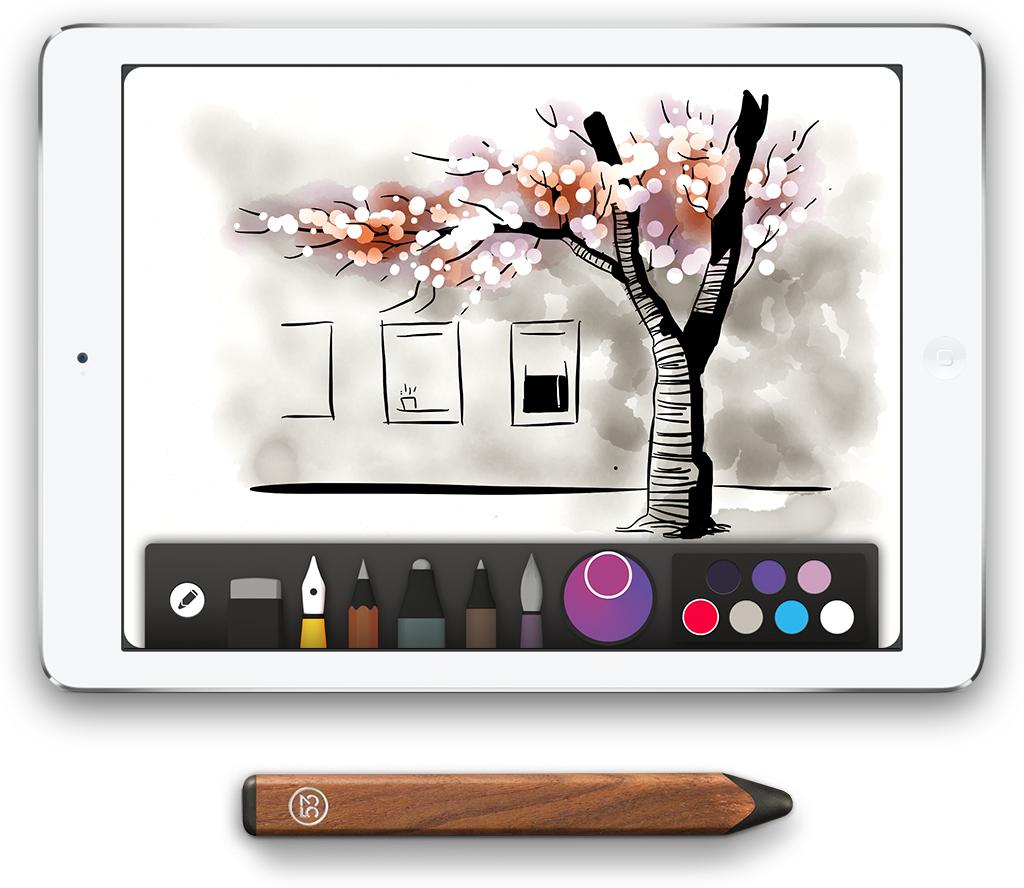
There’s a reason FiftyThree’s Pencil is considered one of the most beautiful and revolutionary pieces of hardware in recent years. “The entire experience was crafted to naturally fit with how people work,” says hardware specialist Adam MacBeth, whose work has helped shape the iPod and Jawbone's wristbands. “Identify the points that will potentially be the most challenging or difficult for users to figure out. Identify where you have the opportunity to add the most value for users along their journey. The integration between hardware and software needs to be the tightest at those points.” The best hardware products lean on software to create an awesome end-to-end experience, MacBeth says. Any hardware effort needs to be multi-disciplinary, and software should take the lead. 
“The best new ideas live at the boundary between the real world and software.” 
Related: The Experience Makes the Product, Not the Features   
2. Pass the Bar (Test).
As a long-time project lead at IDEONicole Kahn often found herself presenting slides to clients about products, solutions, ideas — and much of her success came from telling a great story. This seemed to run counter to the number of boring, bland and ineffective presentations she (and many other people) regularly encounter. Her first piece of advice is to validate that you have a good story to tell by using what she calls the 'Bar Test.' “Bars are friendly, social places, sure, but something really important happens when you’re at a bar,” says Kahn. “You use really direct language. You make sure that what you’re saying is entertaining and engaging. You don’t quote tons of data. You don’t use overly corporate language — except maybe in air quotes.” With this in mind, she encourages presenters to tell their story ideas to people who don't know what you're talking about before they formalize anything. Observe them. Look for when they lean in or look away or reach for their phone. Take 15 minutes to figure out what resonates, and make that the skeleton of your presentation.
While you practice your presentation, pitch, whatever it is - keep a few things in mind

  1. Slow down - if you go to fast, people lose focus on the message while trying to
    keep up. If they're taking notes and you lose them, well, you lose them.
  2. Remember that what you take for granted about your product, your space, your market may be based on things you really really understand and are an expert at. Your audience may not be so informed.
These two combined is a double whammy. I would suggest that you make a video of your presentation and watch it with others from your team. Do one before the Bar test and after you refine it based on the bar test feedback. Practice Practice Practice Practice. Does your message come across the way it sounded in your head?  If not, revise again and Practice Practice Practice Practice some more.
3. Invest in marketing from the start.
Collection of Marteting books
A lot of startups — especially those that are deeply technical — are strapped for resources and don’t prioritize or invest in marketing until their product’s mold has been cast. Robbie Mitchell, head of marketing and communications for education startup Knewton, deeply disagrees. He believes that marketing and product should evolve side-by-side. He's seen tremendous benefits running Knewton's marketing group as its own in-house agency, complete with engineers, designers and product managers devoted to marketing objectives. “How can you know that you’re building something people want unless you try to sell it to them first?” Mitchell says. “You need to validate product-market fit as soon as possible, and the only way to do that is to figure out the value proposition as you’re building the technology.”
This message is a painful one. No one likes investments that turn into the greatest product never sold. 
“Even if your product can do a lot, you still need to tell people how it fits into their lives.” 
4. Nail your positioning for early success.
When Arielle Jackson started to develop the marketing and communications plan around Cover (the Android app quickly snapped up by Twitter), she brought experience from Google, where she managed product marketing for Gmail, Docs, Calendar, etc., and Square, where she led go-to-market plans for new hardware products. In all these instances, developing solid market positioning made the difference. “You need to position your product in the mind of your user,” says Jackson. “And that requires taking your potential users into account, assessing the product’s strengths and weaknesses, and considering your competition. There are so many products out there, and people are busy. You have to know who you are.” She offers a fairly simple formula that combines all of these criteria:
  • For (target customer)
  • Who (statement of need or opportunity),
  • (Product name) is a (product category)
  • That (statement of key benefit).
  • Unlike (competing alternative)
  • (Product name)(statement of primary differentiation).
Example:
For World Wide Web users
who enjoy books,
Amazon is a retail bookseller
that provides instant access to over 1.1 million books.
Unlike traditional book retailers,
Amazon provides a combination of extraordinary convenience, low prices and comprehensive selection.
5. Patch leaks in your funnel.
Tamara Steffens has run business development for companies like Path, Color, and most recently, Microsoft acquisition Acompli. In doing so, she's become laser focused on user acquisition through all channels — including where they drop out of the conversion funnel. She's identified two leaks startups should pay extra attention to.  
The first is Day 1. How many users do you lose the same day they download the app? If your product is at all confusing or intimidating, chances are the average user will turn it off and trash it shortly thereafter.  
The fix: If users stop engaging with your app before they even see what it has to offer, take a close look at your signup process. If you’re losing users who have taken the time to sign up, then you need to scrutinize your welcome flow.
The second leaky bucket is the 6-week mark. How many users are still actively engaged with your app after six weeks? If you're losing a lot of them, your product may be losing its utility or novelty.
The fix: Listen intently to what your customers want from your product and iterate as fast as possible on this feedback. 
“Assume you have 90 seconds with a new user before they decide to use your app or delete it.”
6. Don't get distracted by a vocal minority.
English: Angry woman.
As Reddit's first community manager, Erik Martin presided over a site that now serves 5.5 billion pages to over 100 million monthly unique visitors, and he did it with a very small team. Knowing where to invest time became paramount, and one of the best ways to do this, he says, is to stop wasting time and energy on small bands of loud, angry users. This is something almost every consumer startup will face, and it can throw you way off track. “People express themselves much more often when things are going wrong,” Martin says. “But you have a lot more people that you're serving on a regular basis.” To make sure you're steering this macro community in the right direction, he advises remaining kind and courteous in all communications, recognizing patterns in the feedback you're getting and being responsive when you do. Express empathy to make it clear that real human beings are working to address users' or customers' concerns.

-sources

  First Round Review Post: The 30 Best Pieces of Advice for Entrepreneurs in 2014
  Pass the Bar image via www.mrmtraining.com
  Pencil by FiftyThree Digital Stylus for iPad Air


Sunday, January 25, 2015

#NFL office steps up and rules on #Deflategate, putting an end to the PR fiasco with extraordinary move

Not to look weak in the face of another PR fiasco for the league, earlier today the #NFL ruled on the Patriots punishment for #Deflategate.

The Patriots will have to play the #Superbowl with properly inflated beach balls. In light of this news and a true marketing coup, quick thinking #BaskinRobbins has been chosen as game ball sponsor.

Shown here is a representative of the league guarding the balls to make sure no additional funny business happens up until the big game is played.


Sunday, January 19, 2014

Content, Relevance, Your Opinion, in Your Voice, not Just another Link


A couple of weeks ago I caught Ray Hiltz's Are You Auto-tuning Your Content Marketing? during my internet travels.  I set it aside after reading it until I could get a chance to watch the panel video, a great discussion with relevant insights for us all. I urge you to take the time to watch it in addition to the takeaways listed.

One of the keys to life in the social media world is to never stop learning how to better play here, providing value and/or insight by keeping things relevant for those with whom you engage.

A few of the points (excerpts below) reminded me of a post I have done now and again that is key but often ignored by so many when they share with others on the web. It's a posting etiquette 'request' I have shared in the past, perhaps too dry for some thereby ignored.  Maybe combined with these insights it will be a more relatable and compelling story for those that tend to share the "Link" without the "Why".

Add something to the conversation - Don’t regurgitate the same content everyone else is sharing. This is both sound SEO and content strategy. Read Eric Enge’s post: The Concept Of Sameness & Why It Should Matter

Tell us why you care and why we should - Don't just Have an opinion that was the reason you shared this with us, Share the opinion as well - this, along with our expectations following you, provides relevance.

Provide Authentic Helpfulness, shared "acoustically" in your own voice - Does your content reflect the real you? Is it consistent with your voice on the web?

From a more negative perspective, sometimes I read the content someone shares and wonder what the message was. Is this because the headline you shared seemed interesting to you but you never bothered to read the content behind it yourself?  If so, that's kind of rude (see definition of Etiquette).  If you can't be bothered to read what you are sharing, why would you ask us to do so?  Think of how many other people's time you are wasting with this behavior.  If this doesn't matter to you, I don't want to be following you.  This is probably not the outcome you were looking for when you posted.

In summary, if you are going to share something, please don't just post a link. Read the content, watch the video, think about why it's relevant to you and your audience and then add a comment so we, your audience knows why you think it's relevant for us as well. 


Sunday, November 24, 2013

In Healthcare, Yet Another Hidden Tax in a Long Line of Hidden Taxes...

The was a hidden tax in NY, aka the NYS secret hospital charity care pool, that's not so hidden anymore, it started showing up on hospital remittances as one of the line items between the hospital and our insurer's this past year (at least that is when I started seeing them), and like many government programs it doesn't really work (link below).

Who Benefits from Obamacare? Democrats, Republ...There's another Hidden Tax in Health Care on it's way, but will the old one that doesn't work go away when this one that is seemingly supposed to do the same thing starts? Doubtful. The sad part of this is that the first hidden fee found it's way into our rates already (IMHO, this too could be considered a tax) and it seems reasonable to believe that this new tax that's designed to increase annually will affect our rates each year as well. So it seems like our rates have a built in powered multiplier, even without medical costs themselves going up which they do.  I am sure the answer can be found in the new Obamacare exchanges, but unfortunately there are no options there for small business employees that had quality physician networks and an HSA design, becuase there are no such plans there. Anyone on a plan like this must down grade to the president's version of platinum care instead - and I'm not sure those plans won't be subject to these fees and the effects of them on rates as well.  

Remember, as designed, this is all a good thing.

(1) HOW NEW YORK STATE’S SECRET HOSPITAL CHARITY CARE POOL FUNDS FAIL TO HELP UNINSURED AND UNDERINSURED NEW YORKERS
Enhanced by Zemanta

Tuesday, August 27, 2013

Disrupting the Business Meeting as Usual

Disrupting the Business Meeting as Usual

Caught this the other day when scanning an article about disrupting business meetings as usual. Makes total sense and I know I have been guilty of some part of this a few times as well as suffering through others doing the same:


First Meeting

"PowerPoint slides with long lists of what you’re talking about should be banned. They are used as a prop by the speaker - if they need reminding of what they’re speaking about they can have it on a laptop in front of them. There a few thing worse than watching someone talk through a long list of PowerPoints." 


I've always liked to believe a few short bullets on a slide to guide the meeting participants and/or an audience through the presentation is a good idea, but in thinking about this further, if it's just a meeting, it is more about you as the speaker than the others participating.  Working from your own slides (without presenting them) or a set of notes personalizes and makes it more conversational which makes for a better meeting.  If on the other hand, the slides would make for good note taking, then keep each slide to less than 4 bullets and send it out before the meeting. Let participants figure out what to do with them that better fits their work style.  The other positive benefit of doing this gives meeting participants an idea of what the meeting's going to be about and may even better prepare them for the meeting. 


Enhanced by Zemanta

Tuesday, February 26, 2013

Good news, bad news on Medication Adherence


Good news and bad news here.  As I see it, at least here in the US, too many plans are not implementing reimbursement strategies for pharmacists to play their necessary role in driving adherence.  Perhaps this reality is perception issue is part of why pharmacists are leaving so much money on the table by not being setup to bill for these services with those plans that do.

HIN's third annual Improving Medication Adherence e-survey conducted in January 2013 captured how more than 100 healthcare organizations are improving medication adherence and compliance in the populations they serve. According to survey respondents, beyond the 58 percent not currently reimbursing, the top pharmacist-incented tasks in medication adherence programs are:
  • Not currently reimbursing: 58.3 percent
  • Medication reconciliation: 16.7 percent
  • Resolving drug therapy problems: 16.7 percent
  • Improving medication adherence: 13.9 percent
  • Other: 13.9 percent
  • Patient education: 11.1 percent


Enhanced by Zemanta

Thursday, December 13, 2012

Our Failed Patent System Stifles Innovation Instead of Rewarding for Invention

I have said this before, our patent system is a failed one. Software patents must be reconsidered because win or lose, everyone but the lawyers suffer. Companies are spending so much time and money defensively, they are losing there innovative edge. Smaller companies have to divert precious resources (focus as well as money) to legal rather then innovation. It's sad, really. While I have no sympathy for Apple, they are as much if not more a part of this mess than any and I believe it affects their ability to innovate.

Jury Finds Apple Guilty Of Infringing Three Patents for Handheld Devices, Damages To Be Determined http://buff.ly/ZlyvCh

You can't blame GE or GM for using the loopholes within the system that allow them to pay less in taxes than the average company (if not the average american) and, despite the president doing otherwise, vilify the rich guy for not paying more taxes than he owes under current law. If you want them to pay more, you need to change the law, and eliminate the loopholes.  Here within our patent system, you can't blame the companies for working the system for what they can as it is currently designed, as long as they don't break the law. You must change the system to work for the purpose that serves all, fosters and rewards for innovation and invention - as it was intended. The current system favors big vs small, the trolls vs those developing and delivering the innovative products.  The system does not function this way now.

While for Apple above, it seems perhaps payback for their ongoing battles with Samsung, it is just another example of a lose, lose outcome for everyone, especially consumers.


Wednesday, December 5, 2012

How to Raise Your Rates By Offering Less Value

Re: How to Raise Your Rates By Offering Less Value (Yes, LESS value) via @DerekHalpern

Good insights, thanks Derek. Solid advise once again. I'd like to offer a slightly different twist on this.  It is one I have employed many times in the way we have sold our products.  You need to be careful when you "bundle" component parts into your product message, especially if they can be presumed to have different values to different customers.  Two things happen when you don't carefully plan this out:

1) You potentially devalue your product in the eyes of the customer, in that the additional components are presumed necessary, because the product by itself does not otherwise provide 'enough' value.

2) You devalue the additional components, the otherwise value-add's.  While the hotel pool isn't a direct example of this, it is still an important related concept because it is one of the value-add's of that particular hotel.  It presumably has different meanings to different customers and that in fact, is part of my point.

Today, many companies have procurement groups that are moving towards (if not already applying) a model of commoditizing the products or services they purchase. When you bundle, you may find that what you believe is an apples to oranges comparison with your competitors does not matter to these buyers. In the end, to get the sale, you may end up with price compression. The value-adds you have, especially if the others don’t, should be separate in order to realize their full, potential value.  Sometimes it's better to get the base model in the door, even at a lower margin in order to sell-up the value-add's at a higher one.

-hb

Hands On With iTunes 11, Has Apple's Evolution Left Innovative Process Behind?


Great Macworld article:

     Hands on with iTunes 11 | http://buff.ly/YOrGZG via @macworld

especially the tips on getting back some normalcy in the new version of iTunes. I have used iTunes 11 now for 2 days and while interface changes are slick yet a little non-intuitive vs previous versions, two big concerns come up.

1) on a powerful Quad Core system, everything in the new software is slow to the point of being painful.  This seems to be a trend where Apple as it evolves over time is facing similar issues to Microsoft in that said evolution means more and more bloat in their releases; resulting in poor performance on older, yet still powerful platforms.

2) Searches are broken. This is very frustrating. For instance, if I search for "Girl On Fire" which is Alicia Keys latest album in our collection, it leaves out songs that additionally feature other artists on the album - a very common thing these days in music. If I search on Alicia Keys, he songs show but are still split up as if not part of the same album. I have noticed similar issues related to the way TV shows break down in that portion of the interface.  There are other usability issues as well, but the real point here is that once again (as with maps), Apple is not innovating the way they used to and clearly not testing their software to the anal retentive level that were once a company mandate.

Probably a good time to reference an old post of mine tied to a Rich Karlgaard post on Innovation from back in 2011, it also has a link to a great article on the way Apple used to innovate:

  Eleven Tips++ = Ten Tips: Great Restructuring Winners plus my thoughts too: http://bit.ly/hO3dvi

-hb

Thursday, November 22, 2012

Happy Thanksgiving '12

We can talk about gratitude and give thanks all day long but the truth is, gratitude is morally and intellectually demanding. It takes mental fortitude to see what is awesome in your life instead of what is not awesome. To focus on what you have or are blessed with instead of what you don't have or aren't happy about. 

Many of us have been affected by Sandy, some as a mere and or continuing inconvenience and others have had their lives changed forever by this storm. But today is the day set aside, the prescribed opportunity, to tune in, focus on and be thankful for who and what we do have and even share and send some additional prayers to those that may not be so fortunate.

Enjoy today, bask in the glow of the loved ones that surround you.

Have a Happy Thanksgiving everyone.

-HB


Wednesday, November 21, 2012

Kindness for and a "thank you" to our soldiers. Not sure who this originated from, but to them I say "thank you" as well.

Caught this via email today.  I am not sure of the author but it's an emotional read. I shared it earlier on Facebook and response was very similar to my own so I figured I should share here too.  

I put my carry-on in the luggage compartment and sat down in my assigned seat. It was going to be a long flight. 'I'm glad I have a good book to read. Perhaps I will get a short nap,' I thought. Just before take-off, a line of soldiers came down the aisle and filled all the vacant seats, totally surrounding me. I decided to start a conversation. 'Where are you headed?' I asked the soldier seated nearest to me. 'Petawawa. We'll be there for two weeks for special training, and then we're being deployed to Afghanistan.' After flying for about an hour, an announcement was made that sack lunches were available for five dollars... It would be several hours before we reached the east, and I quickly decided a lunch would help pass the time... 

As I reached for my wallet, I overheard a soldier ask his buddy if he planned to buy lunch. 'No, that seems like a lot of money for just a sack lunch. Probably wouldn't be worth five bucks. I'll wait till we get to base.' His friend agreed. I looked around at the other soldiers. None were buying lunch. I walked to the back of the plane and handed the flight attendant a fifty dollar bill. 'Take a lunch to all those soldiers.' She grabbed my arms and squeezed tightly. Her eyes wet with tears, she thanked me. 'My son was a soldier in Iraq; it's almost like you are doing it for him.'

Picking up ten sacks, she headed up the aisle to where the soldiers were seated. She stopped at my seat and asked, 'Which do you like best - beef or chicken?' 'Chicken,' I replied, wondering why she asked. She turned and went to the front of plane, returning a minute later with a dinner plate from first class. 'This is your thanks.' 

After we finished eating, I went again to the back of the plane, heading for the rest room. A man stopped me. 'I saw what you did. I want to be part of it... Here, take this.' He handed me twenty-five dollars. Soon after I returned to my seat, I saw the Flight Captain coming down the aisle, looking at the aisle numbers as he walked, I hoped he was not looking for me, but noticed he was looking at the numbers only on my side of the plane. When he got to my row he stopped, smiled, held out his hand and said, 'I want to shake your hand.' Quickly unfastening my seatbelt I stood and took the Captain's hand. With a booming voice he said, 'I was a soldier and I was a military pilot. Once, someone bought me a lunch. It was an act of kindness I never forgot.' I was embarrassed when applause was heard from all of the passengers. 

Later I walked to the front of the plane so I could stretch my legs. A man who was seated about six rows in front of me reached out his hand, wanting to shake mine. He left another twenty-five dollars in my palm. When we landed I gathered my belongings and started to deplane... Waiting just inside the airplane door was a man who stopped me, put something in my shirt pocket, turned, and walked away without saying a word. Another twenty-five dollars! Upon entering the terminal, I saw the soldiers gathering for their trip to the base. I walked over to them and handed them seventy-five dollars. 'It will take you some time to reach the base. It will be about time for a sandwich. God Bless You.' 

Ten young men left that flight feeling the love and respect of their fellow travelers. As I walked briskly to my car, I whispered a prayer for their safe return. These soldiers were giving their all for our country. I could only give them a couple of meals. It seemed so little... 

A veteran is someone who, at one point in his life, wrote a blank check made payable to 'The United States of America ' for an amount of 'up to and including my life.' That is Honor, and there are way too many people in this country who no longer understand it.


Thank You to Our Soldiers and Thank You to whomever it was that shared this and reminded us once again that:

"Kindness from strangers can manifest through grand gestures, but most often it shows up in normal, everyday occurrences. It is usually short and sweet, simple and sincere. The kindness of strangers seeks no compensation and has no expectation of reward. It is usually spontaneous and responsive to a perceived need. In short, it is authentic and free." - Adolfo Quezada

-HB

Friday, February 24, 2012

Could Social Media Law 2012 Turn Concepts Like BuzzFeed Into BuzzKill? Privacy And The Sanctity Of The Timeline...


A few weeks back, I commented on Brian Wassom’s January 5th Mashable article:  5 Predictions for Social Media Law in 2012


My comment was:
"so, is time to start worrying about the business of illegal post stuffing/purging of our social media timelines by criminal parties for those with ulterior motives?"


The comment didn’t generate any responses but it should be a concern for us all.  Another article referenced in a comment from Darren Heitner was regarding our Facebook post’s discoverability.  The abstract follows:

ABSTRACT: Facebook has revolutionized the way that people communicate and do business by providing an open and connected environment for individuals and businesses alike. This openness has largely contributed to both its popularity and success. However, enjoying the openness of this revolutionary platform may come at an unexpected cost, especially for those who do not understand how the website’s content may be used as evidence in a lawsuit. Darren Heitner demonstrates how content published on a person’s Facebook account may be discoverable for the purposes of litigation, even when the information sought is unavailable through Facebook’s privacy settings.

Note, that despite privacy settings and whether they work as described by Facebook (another concern of mine), all of your posts are discoverable.  I believe this should be limited to what was shared based on the expectation how it was shared ie: public (friends of friends) vs a semi private (friends only) conversation, or private (one on one chat) but that is not the way it goes.  Again, this does not even take into account whether the privacy settings work as Facebook says they do when other Facebook users browse your timeline or photos and potentially worse, when you have no understanding of the actual access a Facebook partner has to your friends, timelines etc.  For instance, is that partner granted access as a friend, a friend of a friend, or is it’s access as if it were you yourself?  If you are not careful, it’s very scary what could be exposed to an audience other than what you believed, expected (or intended) based on your privacy settings.

This all said, there was an article this week on Digiday by Saya Weissman regarding BuzzFeed’s Facebook Time Machine which helps you go back in time, on your Facebook Timeline that is, with nostalgic blasts from the past potentially interesting to others.  While the concept is interesting and even tempting, it does play right into my concerns about the ability to post content into our timelines rather than in real or near real time.  What is going to protect us from the potential side effects of errant, missing or undesirable data becoming legal discovery as if it was posted when (and if) it happened?  While the BuzzFeed idea is neat, who protects our timelines from posts as well as unintentional deletions?  Are the platform providers and their employees themselves adequate guardians?


One might argue that if you are uncomfortable with the downside of these new social media platforms, don’t use them.  The problem is that they are very powerful platforms connecting and reconnecting people, businesses, brands, b2b, b2c, etc. enabling engagement, showing measurable and immeasurable benefits for all parties even in these very early stages.  


Staying away is not the answer.  Caution certainly should be.  Educating both young and old with a clear, accurate understanding how our data is being accessed, used and/or could be used in the future would be a big step in the right direction as well. Perhaps an industry partnership and/or adcouncil campaign is necessary. Regardless, of whether a timeline should be legally discoverable, I believe the concern for the sanctity of our timelines is real and will have to be addressed somehow ... even if in general, they should be no more a record of events than hearsay and rumor.


-hb


Enhanced by Zemanta