Thursday, January 29, 2015

My 6 Choice Pieces Of Advice for Entrepreneurs for 2015

I am always reading. Whether books, certain newspapers, magazines, selected content from the web, etc. I love to absorb all I can on what people are thinking and the great ideas and advice we can share among angels, entrepreneurs, startups and small businesses.

Usually I comment and reference the post of others - it's the easy (perhaps lazy) way to share, but when mobile so much of the time, it makes it so much easier to share the good stuff.  One of the drawbacks of that approach is that sometimes the article or post I find has a lot of content and doesn't get right to the points I specifically want to share. My apologies for that. I will continue to search for a mobile tool to make it easier to extract just that parts I want to focus on, and of course source back to the original for those that want to dig in deeper.  Any insights, or tools that work for you, please feel free to share...

So there was this post that I have been sitting on for a while, The 30 Best Pieces of Advice for Entrepreneurs in 2014 from First Round Review.  It was full of great insights and advice for 2014.

I had a few favorites (#21, #29, #16, #13, #11, #5) and I'd like to share them as My 6 Best Pieces of Advice for Entrepreneurs for 2015. I've skipped stuff about personnel, I will save that for another post.

1. Build an experience, not just a product.
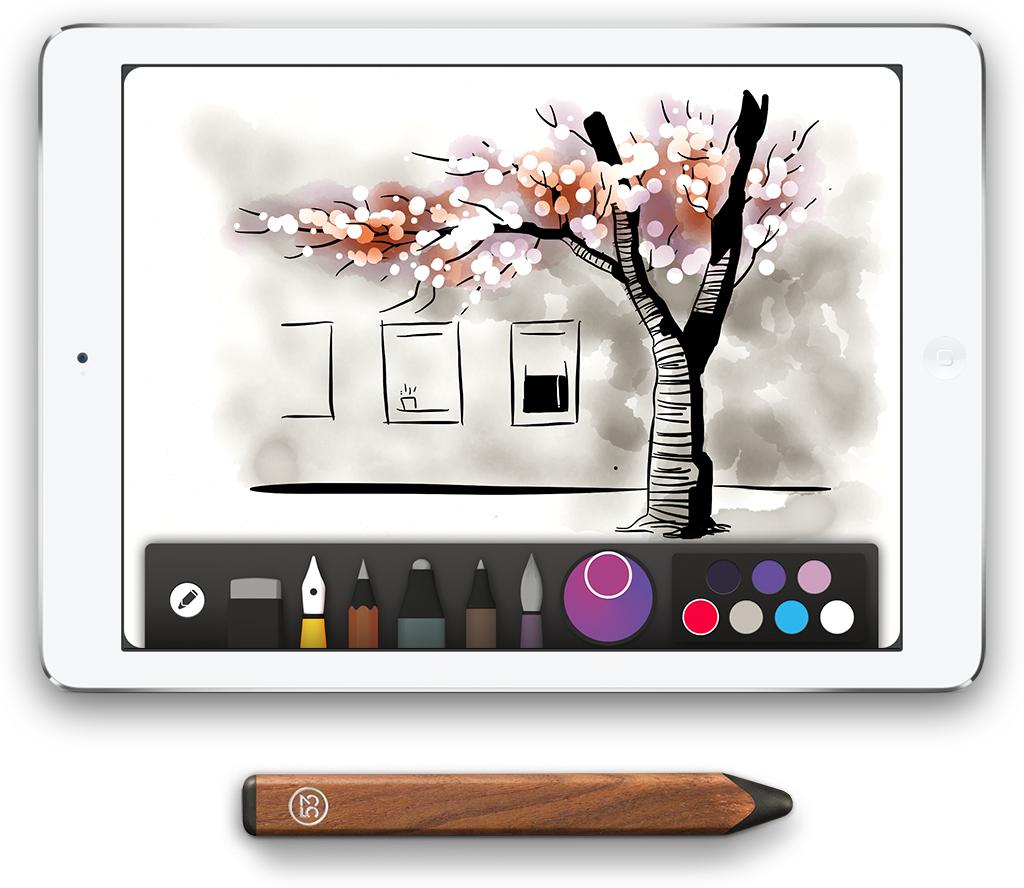
There’s a reason FiftyThree’s Pencil is considered one of the most beautiful and revolutionary pieces of hardware in recent years. “The entire experience was crafted to naturally fit with how people work,” says hardware specialist Adam MacBeth, whose work has helped shape the iPod and Jawbone's wristbands. “Identify the points that will potentially be the most challenging or difficult for users to figure out. Identify where you have the opportunity to add the most value for users along their journey. The integration between hardware and software needs to be the tightest at those points.” The best hardware products lean on software to create an awesome end-to-end experience, MacBeth says. Any hardware effort needs to be multi-disciplinary, and software should take the lead. 
“The best new ideas live at the boundary between the real world and software.” 
Related: The Experience Makes the Product, Not the Features   
2. Pass the Bar (Test).
As a long-time project lead at IDEO, Nicole Kahn often found herself presenting slides to clients about products, solutions, ideas — and much of her success came from telling a great story. This seemed to run counter to the number of boring, bland and ineffective presentations she (and many other people) regularly encounter. Her first piece of advice is to validate that you have a good story to tell by using what she calls the 'Bar Test.' “Bars are friendly, social places, sure, but something really important happens when you’re at a bar,” says Kahn. “You use really direct language. You make sure that what you’re saying is entertaining and engaging. You don’t quote tons of data. You don’t use overly corporate language — except maybe in air quotes.” With this in mind, she encourages presenters to tell their story ideas to people who don't know what you're talking about before they formalize anything. Observe them. Look for when they lean in or look away or reach for their phone. Take 15 minutes to figure out what resonates, and make that the skeleton of your presentation.

While you practice your presentation, pitch, whatever it is - keep a few things in mind

  1. Slow down - if you go to fast, people lose focus on the message while trying to
    keep up. If they're taking notes and you lose them, well, you lose them.
  2. Remember that what you take for granted about your product, your space, your market may be based on things you really really understand and are an expert at. Your audience may not be so informed.
These two combined is a double whammy. I would suggest that you make a video of your presentation and watch it with others from your team. Do one before the Bar test and after you refine it based on the bar test feedback. Practice Practice Practice Practice. Does your message come across the way it sounded in your head?  If not, revise again and Practice Practice Practice Practice some more.
3. Invest in marketing from the start.
Collection of Marteting books
A lot of startups — especially those that are deeply technical — are strapped for resources and don’t prioritize or invest in marketing until their product’s mold has been cast. Robbie Mitchell, head of marketing and communications for education startup Knewton, deeply disagrees. He believes that marketing and product should evolve side-by-side. He's seen tremendous benefits running Knewton's marketing group as its own in-house agency, complete with engineers, designers and product managers devoted to marketing objectives. “How can you know that you’re building something people want unless you try to sell it to them first?” Mitchell says. “You need to validate product-market fit as soon as possible, and the only way to do that is to figure out the value proposition as you’re building the technology.”
This message is a painful one. No one likes investments that turn into the greatest product never sold. 
“Even if your product can do a lot, you still need to tell people how it fits into their lives.” 
4. Nail your positioning for early success.
When Arielle Jackson started to develop the marketing and communications plan around Cover (the Android app quickly snapped up by Twitter), she brought experience from Google, where she managed product marketing for Gmail, Docs, Calendar, etc., and Square, where she led go-to-market plans for new hardware products. In all these instances, developing solid market positioning made the difference. “You need to position your product in the mind of your user,” says Jackson. “And that requires taking your potential users into account, assessing the product’s strengths and weaknesses, and considering your competition. There are so many products out there, and people are busy. You have to know who you are.” She offers a fairly simple formula that combines all of these criteria:
  • For (target customer)
  • Who (statement of need or opportunity),
  • (Product name) is a (product category)
  • That (statement of key benefit).
  • Unlike (competing alternative)
  • (Product name)(statement of primary differentiation).
Example:
For World Wide Web users
who enjoy books,
Amazon is a retail bookseller
that provides instant access to over 1.1 million books.
Unlike traditional book retailers,
Amazon provides a combination of extraordinary convenience, low prices and comprehensive selection.
5. Patch leaks in your funnel.
Tamara Steffens has run business development for companies like Path, Color, and most recently, Microsoft acquisition Acompli. In doing so, she's become laser focused on user acquisition through all channels — including where they drop out of the conversion funnel. She's identified two leaks startups should pay extra attention to.  
The first is Day 1. How many users do you lose the same day they download the app? If your product is at all confusing or intimidating, chances are the average user will turn it off and trash it shortly thereafter.  
The fix: If users stop engaging with your app before they even see what it has to offer, take a close look at your signup process. If you’re losing users who have taken the time to sign up, then you need to scrutinize your welcome flow.
The second leaky bucket is the 6-week mark. How many users are still actively engaged with your app after six weeks? If you're losing a lot of them, your product may be losing its utility or novelty.
The fix: Listen intently to what your customers want from your product and iterate as fast as possible on this feedback. 
“Assume you have 90 seconds with a new user before they decide to use your app or delete it.”
6. Don't get distracted by a vocal minority.
English: Angry woman.
As Reddit's first community manager, Erik Martin presided over a site that now serves 5.5 billion pages to over 100 million monthly unique visitors, and he did it with a very small team. Knowing where to invest time became paramount, and one of the best ways to do this, he says, is to stop wasting time and energy on small bands of loud, angry users. This is something almost every consumer startup will face, and it can throw you way off track. “People express themselves much more often when things are going wrong,” Martin says. “But you have a lot more people that you're serving on a regular basis.” To make sure you're steering this macro community in the right direction, he advises remaining kind and courteous in all communications, recognizing patterns in the feedback you're getting and being responsive when you do. Express empathy to make it clear that real human beings are working to address users' or customers' concerns.

-sources

  First Round Review Post: The 30 Best Pieces of Advice for Entrepreneurs in 2014
  Pass the Bar image via www.mrmtraining.com
  Pencil by FiftyThree Digital Stylus for iPad Air


Sunday, January 25, 2015

#NFL office steps up and rules on #Deflategate, putting an end to the PR fiasco with extraordinary move

Not to look weak in the face of another PR fiasco for the league, earlier today the #NFL ruled on the Patriots punishment for #Deflategate.

The Patriots will have to play the #Superbowl with properly inflated beach balls. In light of this news and a true marketing coup, quick thinking #BaskinRobbins has been chosen as game ball sponsor.

Shown here is a representative of the league guarding the balls to make sure no additional funny business happens up until the big game is played.


Sunday, January 19, 2014

Content, Relevance, Your Opinion, in Your Voice, not Just another Link


A couple of weeks ago I caught Ray Hiltz's Are You Auto-tuning Your Content Marketing? during my internet travels.  I set it aside after reading it until I could get a chance to watch the panel video, a great discussion with relevant insights for us all. I urge you to take the time to watch it in addition to the takeaways listed.

One of the keys to life in the social media world is to never stop learning how to better play here, providing value and/or insight by keeping things relevant for those with whom you engage.

A few of the points (excerpts below) reminded me of a post I have done now and again that is key but often ignored by so many when they share with others on the web. It's a posting etiquette 'request' I have shared in the past, perhaps too dry for some thereby ignored.  Maybe combined with these insights it will be a more relatable and compelling story for those that tend to share the "Link" without the "Why".

Add something to the conversation - Don’t regurgitate the same content everyone else is sharing. This is both sound SEO and content strategy. Read Eric Enge’s post: The Concept Of Sameness & Why It Should Matter

Tell us why you care and why we should - Don't just Have an opinion that was the reason you shared this with us, Share the opinion as well - this, along with our expectations following you, provides relevance.

Provide Authentic Helpfulness, shared "acoustically" in your own voice - Does your content reflect the real you? Is it consistent with your voice on the web?

From a more negative perspective, sometimes I read the content someone shares and wonder what the message was. Is this because the headline you shared seemed interesting to you but you never bothered to read the content behind it yourself?  If so, that's kind of rude (see definition of Etiquette).  If you can't be bothered to read what you are sharing, why would you ask us to do so?  Think of how many other people's time you are wasting with this behavior.  If this doesn't matter to you, I don't want to be following you.  This is probably not the outcome you were looking for when you posted.

In summary, if you are going to share something, please don't just post a link. Read the content, watch the video, think about why it's relevant to you and your audience and then add a comment so we, your audience knows why you think it's relevant for us as well. 


Sunday, November 24, 2013

In Healthcare, Yet Another Hidden Tax in a Long Line of Hidden Taxes...

The was a hidden tax in NY, aka the NYS secret hospital charity care pool, that's not so hidden anymore, it started showing up on hospital remittances as one of the line items between the hospital and our insurer's this past year (at least that is when I started seeing them), and like many government programs it doesn't really work (link below).

Who Benefits from Obamacare? Democrats, Republ...There's another Hidden Tax in Health Care on it's way, but will the old one that doesn't work go away when this one that is seemingly supposed to do the same thing starts? Doubtful. The sad part of this is that the first hidden fee found it's way into our rates already (IMHO, this too could be considered a tax) and it seems reasonable to believe that this new tax that's designed to increase annually will affect our rates each year as well. So it seems like our rates have a built in powered multiplier, even without medical costs themselves going up which they do.  I am sure the answer can be found in the new Obamacare exchanges, but unfortunately there are no options there for small business employees that had quality physician networks and an HSA design, becuase there are no such plans there. Anyone on a plan like this must down grade to the president's version of platinum care instead - and I'm not sure those plans won't be subject to these fees and the effects of them on rates as well.  

Remember, as designed, this is all a good thing.

(1) HOW NEW YORK STATE’S SECRET HOSPITAL CHARITY CARE POOL FUNDS FAIL TO HELP UNINSURED AND UNDERINSURED NEW YORKERS
Enhanced by Zemanta

Tuesday, August 27, 2013

Disrupting the Business Meeting as Usual

Disrupting the Business Meeting as Usual

Caught this the other day when scanning an article about disrupting business meetings as usual. Makes total sense and I know I have been guilty of some part of this a few times as well as suffering through others doing the same:


First Meeting

"PowerPoint slides with long lists of what you’re talking about should be banned. They are used as a prop by the speaker - if they need reminding of what they’re speaking about they can have it on a laptop in front of them. There a few thing worse than watching someone talk through a long list of PowerPoints." 


I've always liked to believe a few short bullets on a slide to guide the meeting participants and/or an audience through the presentation is a good idea, but in thinking about this further, if it's just a meeting, it is more about you as the speaker than the others participating.  Working from your own slides (without presenting them) or a set of notes personalizes and makes it more conversational which makes for a better meeting.  If on the other hand, the slides would make for good note taking, then keep each slide to less than 4 bullets and send it out before the meeting. Let participants figure out what to do with them that better fits their work style.  The other positive benefit of doing this gives meeting participants an idea of what the meeting's going to be about and may even better prepare them for the meeting. 


Enhanced by Zemanta

Tuesday, February 26, 2013

Good news, bad news on Medication Adherence


Good news and bad news here.  As I see it, at least here in the US, too many plans are not implementing reimbursement strategies for pharmacists to play their necessary role in driving adherence.  Perhaps this reality is perception issue is part of why pharmacists are leaving so much money on the table by not being setup to bill for these services with those plans that do.

HIN's third annual Improving Medication Adherence e-survey conducted in January 2013 captured how more than 100 healthcare organizations are improving medication adherence and compliance in the populations they serve. According to survey respondents, beyond the 58 percent not currently reimbursing, the top pharmacist-incented tasks in medication adherence programs are:
  • Not currently reimbursing: 58.3 percent
  • Medication reconciliation: 16.7 percent
  • Resolving drug therapy problems: 16.7 percent
  • Improving medication adherence: 13.9 percent
  • Other: 13.9 percent
  • Patient education: 11.1 percent


Enhanced by Zemanta

Thursday, December 13, 2012

Our Failed Patent System Stifles Innovation Instead of Rewarding for Invention

I have said this before, our patent system is a failed one. Software patents must be reconsidered because win or lose, everyone but the lawyers suffer. Companies are spending so much time and money defensively, they are losing there innovative edge. Smaller companies have to divert precious resources (focus as well as money) to legal rather then innovation. It's sad, really. While I have no sympathy for Apple, they are as much if not more a part of this mess than any and I believe it affects their ability to innovate.

Jury Finds Apple Guilty Of Infringing Three Patents for Handheld Devices, Damages To Be Determined http://buff.ly/ZlyvCh

You can't blame GE or GM for using the loopholes within the system that allow them to pay less in taxes than the average company (if not the average american) and, despite the president doing otherwise, vilify the rich guy for not paying more taxes than he owes under current law. If you want them to pay more, you need to change the law, and eliminate the loopholes.  Here within our patent system, you can't blame the companies for working the system for what they can as it is currently designed, as long as they don't break the law. You must change the system to work for the purpose that serves all, fosters and rewards for innovation and invention - as it was intended. The current system favors big vs small, the trolls vs those developing and delivering the innovative products.  The system does not function this way now.

While for Apple above, it seems perhaps payback for their ongoing battles with Samsung, it is just another example of a lose, lose outcome for everyone, especially consumers.